

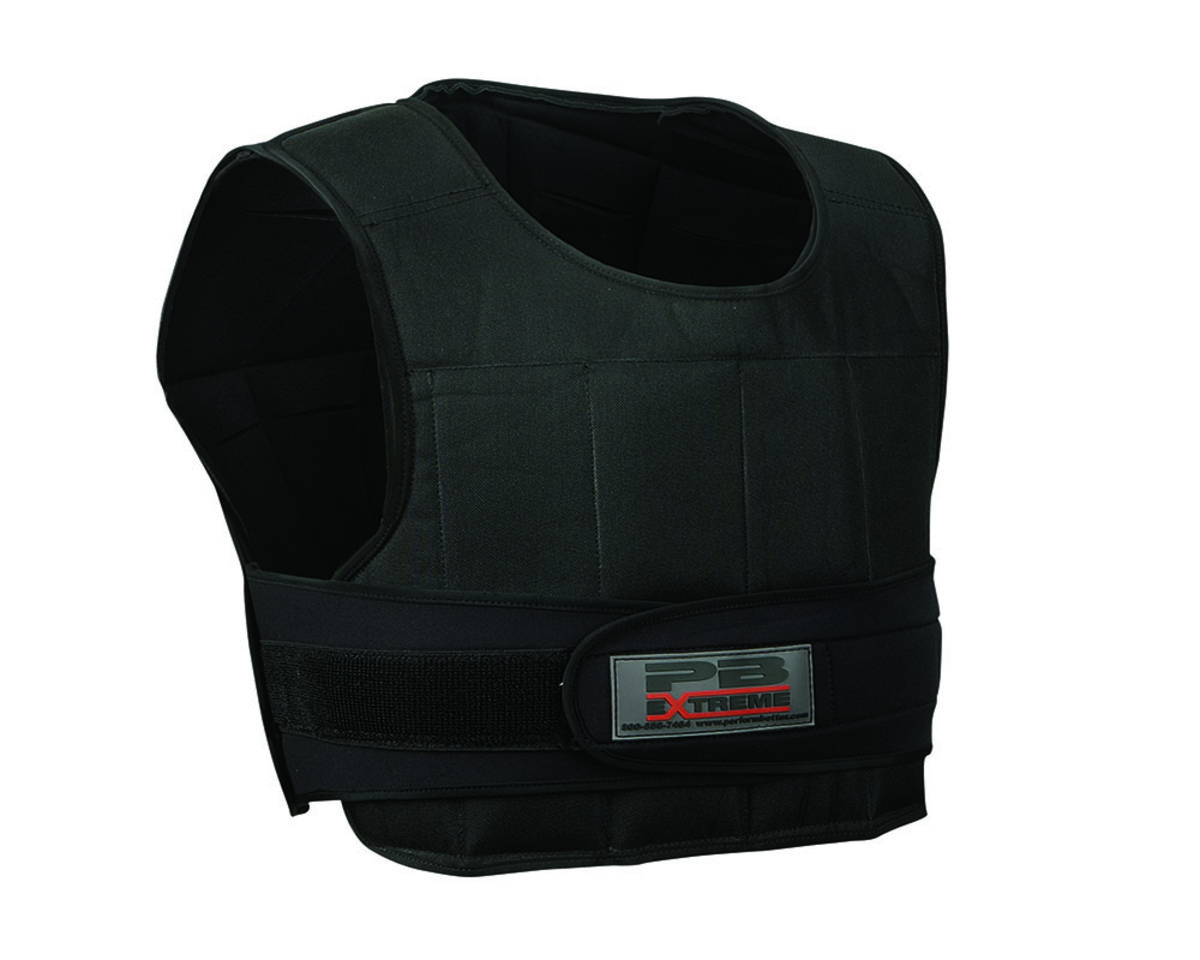
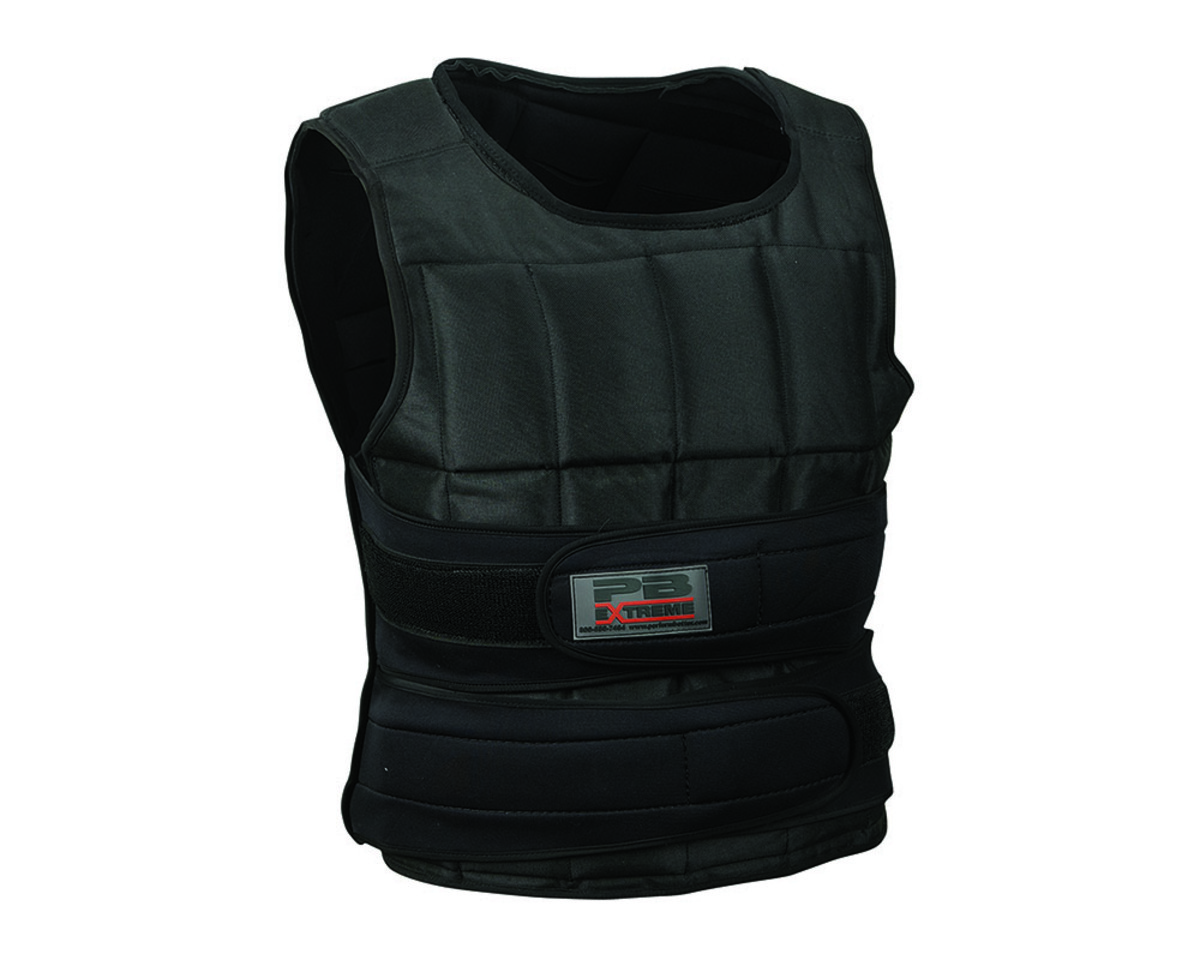
PB Extreme weight vests are adjustable weight vests that are ideal for adding extra weight to your workouts. The neoprene-coated steel weights each weigh 0.5 lbs and can be easily inserted into and removed from the vest to adjust the weight.The 20 lb. vest comes with a total weight of 20 lbs. (approx. 9.07 kg). Other vest weights are available. PB Extreme weight vests are machine-washable and therefore easy to clean. The Velcro fastening keeps the vest snug and secure. The vest is one-size-fits-all.
PB Extreme weight vests are adjustable weight vests that are ideal for adding extra weight to your workouts. The neoprene-coated steel weights each weigh 0.5 lbs and can be easily inserted into and removed from the vest to adjust the weight. The 10 lb vest is supplied with a weight of 10 lbs (approx. 4.5 kg) and can hold up to 20 lbs (approx. 9.07 kg). Includes 26 adjustable pockets (the pockets can be filled twice). Additional vest weights are available. PB Extreme weight vests are machine-washable and therefore easy to clean. The Velcro fastening keeps the vest snug and secure. The vest is one-size-fits-all.


The Lebert Equalizer is a simple, handy and versatile piece of kit for your full-body workoutIn the USA, personal trainers swear by the Lebert Equalizer – and for good reason! It is a portable, simple piece of exercise equipment that can be used to train the whole body. Arm, back, chest and leg muscles: there are no limits to what you can achieve with the Lebert Equaliser. Your own body weight provides the resistance. You determine the intensity of your workout yourself, for example by changing the position of your legs whilst performing the exercises. The Lebert Equalizer is supplied to you as pictured (in a pair). Product details: Dimensions: 70 x 60 cm (H/W) Weight: 3.6 kg Maximum load: 180 kg Colours: yellow/pink/green


PowerCube – Perfect bodyweight training. Any time, anywhere! From push-up variations and pull & push exercises to a wide variety of holding positions – with the PowerCube, there are virtually no limits to bodyweight training. This highly robust training device, developed by calisthenics athlete Tim Wacker in collaboration with physiotherapists, professional athletes and sports orthopaedists, offers numerous training options using your own body weight. The PowerCube is suitable for every fitness level – whether you’re a beginner or a professional athlete. With its three-dimensional shape, it offers countless exercise variations that can be performed regardless of where you choose to train. Thanks to its durable construction from galvanised steel, the PowerCube can be used for training in the gym or at home. By varying the exercise techniques and adjusting body angles during the workout, the training intensity and level of difficulty can be tailored to individual needs. The PowerCube thus offers everyone an innovative and highly effective workout. The PowerCube is also regarded as an ideal tool in sports orthopaedics and physiotherapy. Product details Material: galvanised steel Dimensions: 187.6 x 108 cm (L/W)Max. load: 190 kg Pole diameter: 33.7 mm Net weight: 22 kg Colour: black and silver Contents 1x PowerCube Assembly instructions
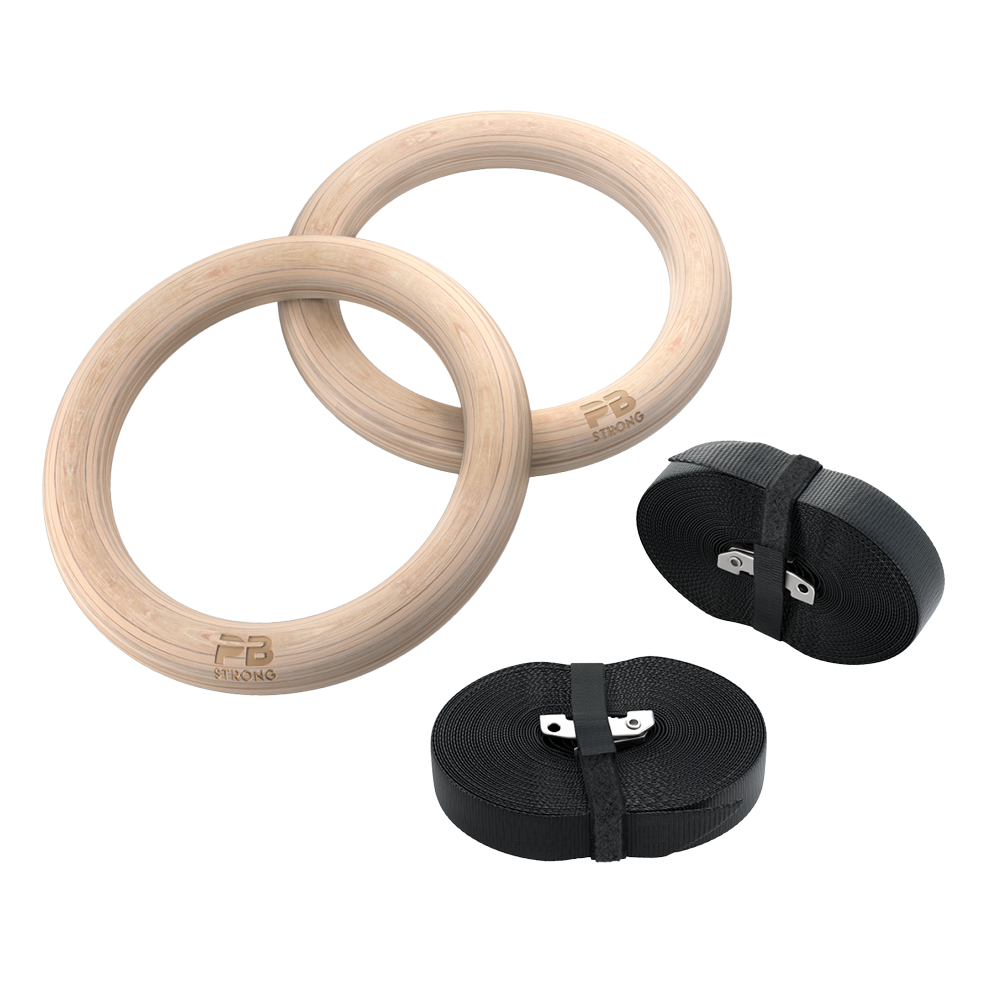
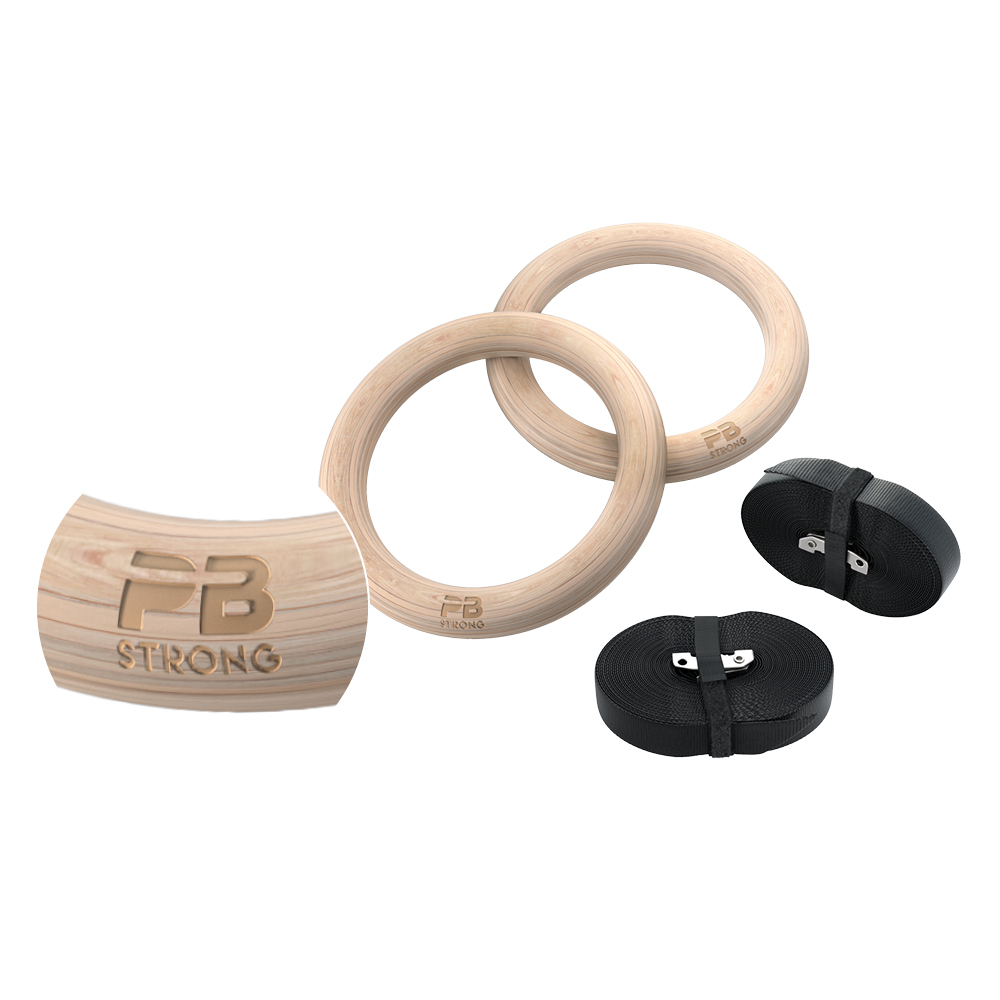
PB Strong Gymnastic RingsTrain like the professional gymnastsThe straps on the PB Strong Turn Rings are extra-long at 5.4 m (divided into 18 increments of 30 cm each) and can be attached anywhere where there are sturdy anchoring points at a sufficient height. This makes the rings suitable for both home use and professional use in the gym. The material used for the straps, as well as for the rings themselves, is extremely durable. The maximum load capacity is 300 kg.Product details:Material (ring): woodMaterial (strap): NylonOuter diameter (rings): 23.5 cmInner diameter (rings): 17 cmDimensions (strap): 550 cm long, 3.8 cm wideHandle thickness: 3.2 cmWeight: 1.8 kgColour: Black, natural woodLoad capacity: max. 300 kgSpecial feature: Optimal grip for magnesium


Versatile training with gymnastic ringsThe PB Strong gymnastic rings are an effective piece of equipment for functional whole-body training. They enable an intensive workout using your own body weight and specifically target strength, stability and coordination – particularly in the core, arm and shoulder muscles. Thanks to their robust materials and high load-bearing capacity, the gymnastic rings are suitable for use in both home gyms and professional studios. The rings offer versatile training options across various fitness levels. The included mounting straps can be easily attached to sturdy anchor points and individually adjusted. This makes the gymnastic rings flexible to use and quick to set up – for an effective workout anytime, anywhere.
You're not sure which equipment is the right one?
Read our sales advisor and find out everything about calisthenics. In addition to exercises, training tips and product recommendations you will also find suitable training plans for your level.
Index
Chapter 1
What is Calisthenics?

The term calisthenics originates from the Greek and means something like beautiful power. For some years now, more and more people are getting enthusiastic about this kind of movement. In almost every big city you can find Calisthenics Parks. What such a training looks like and what you have to consider, you can now find out.
What does calisthenics mean?
Calisthenics is not the same as bodyweight training. Where bodyweight training ends, calisthenics training only begins. A good bodyweight training provides the basis for calisthenics training. The same basic exercises such as push-ups, pull-ups, planks, etc. are performed. However, in calisthenics extremely difficult and almost artistic movements are added.
In the meantime calisthenics has rather grown into a lifestyle. There are communities in every city, Calisthenics parks are springing up all over Germany, international championships are held and there are thousands of Calisthenics videos on YouTube. Especially the outdoor training and the strenuous exercises create a strong community.
What effects do I achieve with Calisthenics Training?
The major advantages of calisthenics training are
- Exercising outdoors
- almost only whole body exercises
- extreme body tension
- as good as free
- functional strength
- promotes mobility
- lower risk of injury than training with weights
And the training in the community increases the motivation for the training tremendously. For those who like to train outside and in a group, calisthenics is a good choice.
Chapter 2
Calisthenics Workout Setup

You should set up your training based on your fitness level. You can increase your workouts per week, number of exercises, sets, etc. depending on how fit you already are.
How many repetitions are useful for calisthenics training?
When training with your own body weight, different rules apply than when training with weights. Do more repetitions and more sets. The goal is to make the muscle exhausted so that it can recover and become stronger until the next training. To do this, it needs a sufficient training stimulus. The following table gives you a good overview of how you should build your training.
| Beginner | Advanced | Pro | |
| Repetitions | 12-15 | 15-20 | 20 or additional weights |
| Number of Exercises | 5-8 | 7-12 | 7-15 |
| Sets | 3-4 | 4-6 | 3-7 |
| Breaks | 1-2 min | 45 Sec - 90 Sec | 45 Sec |
How often should I do a Calisthenics training per week?
Even with a calisthenics training a split program makes sense. It is a good idea to split the program into push, pull and leg exercises. Then you can either do each training 1x per week, so
- Monday push exercises
- Wednesday pull exercises
- Friday leg exercises
Or you have enough time and recovery, then you can also set a training stimulus twice a week and divide it up as follows
- Monday push exercises
- Tuesday pull exercises
- Wednesday leg exercises
- Thursday PAUSE
- Friday push exercises
- Saturday pull exercises
- Sunday leg exercises
The advantage in this variant is that you will achieve results faster, so with only 1x per week training per muscle group. However, this is a question of your time budget and your recovery. With so much training the body needs a lot of nutrients and sleep. Therefore, your everyday life should be fully focused on training.
When does it make sense to start using additional weights?
You should use an additional weight as soon as you cannot make the exercise more difficult by using another lever (e.g. negative push-ups), or if you do not feel a sufficient training stimulus anymore, i.e. if you are not getting stronger.
From this point on you should help with bands and weight vests.
Chapter 3
Calisthenics for Beginners

Especially in the beginning there is no way around tools for calisthenics training. Super bands are suitable for pull-ups, bars or benches for push-ups and a sling trainer for leg training.
For many, the motivation to start with calisthenics training is to master cool moves and to be able to show off a little. But here we have to disappoint you a bit. Until you master these moves, it takes a while. Especially in the beginning you have to have a lot of patience and practice again and again.
But with a little time, progress and success always come quickly. Therefore it is very important for beginners to master the basic exercises and then slowly but surely improve. You will find the basic exercises in the next chapter.
To get you started, there are a few tools to help you get started. You can of course start without any equipment, but with equipment it is easier to train and the motivation is also higher.
Which tools do I need for the calisthenics training?
For pull exercises we recommend a pull-up bar or rings and super bands. If you have an outdoor park nearby, you can also train super pull-ups and the like there. With the Superband you can support chin-ups especially at the beginning. Later it is also more than helpful for muscle-ups. Superbands are available in different strengths. If you have some fitness and can do about 2-3 pull-ups, you should get a purple super band. If you can't do a pull-up at all, start rowing and try a black Superband slowly.
For push-ups and pressure exercises, parallels are ideal. With these you can increase your angle and make the push-ups a little easier. But parallels are also great for negative push-ups or shoulder pressure exercises later on. If you want to buy an all-round tool right away, we recommend the PowerCube. With this tool you can perform pressure exercises as well as rowing movements.
For advanced users we can recommend weight vests. At some point you reach the point where your own body weight is no longer sufficient as resistance. Here weight vests are a sensible investment. For push-ups, chin-ups, leg exercises, etc. the additional weight provides a perfect training stimulus.

For calisthenics, the most important thing is a solid base. Of course you want to have "cool moves" on it quickly, but it takes a lot of patience to get there. That's why you train the basic exercises at the beginning. These we present to you here:
In the following video you will get a quick and clear introduction to the basic exercises in calisthenics:
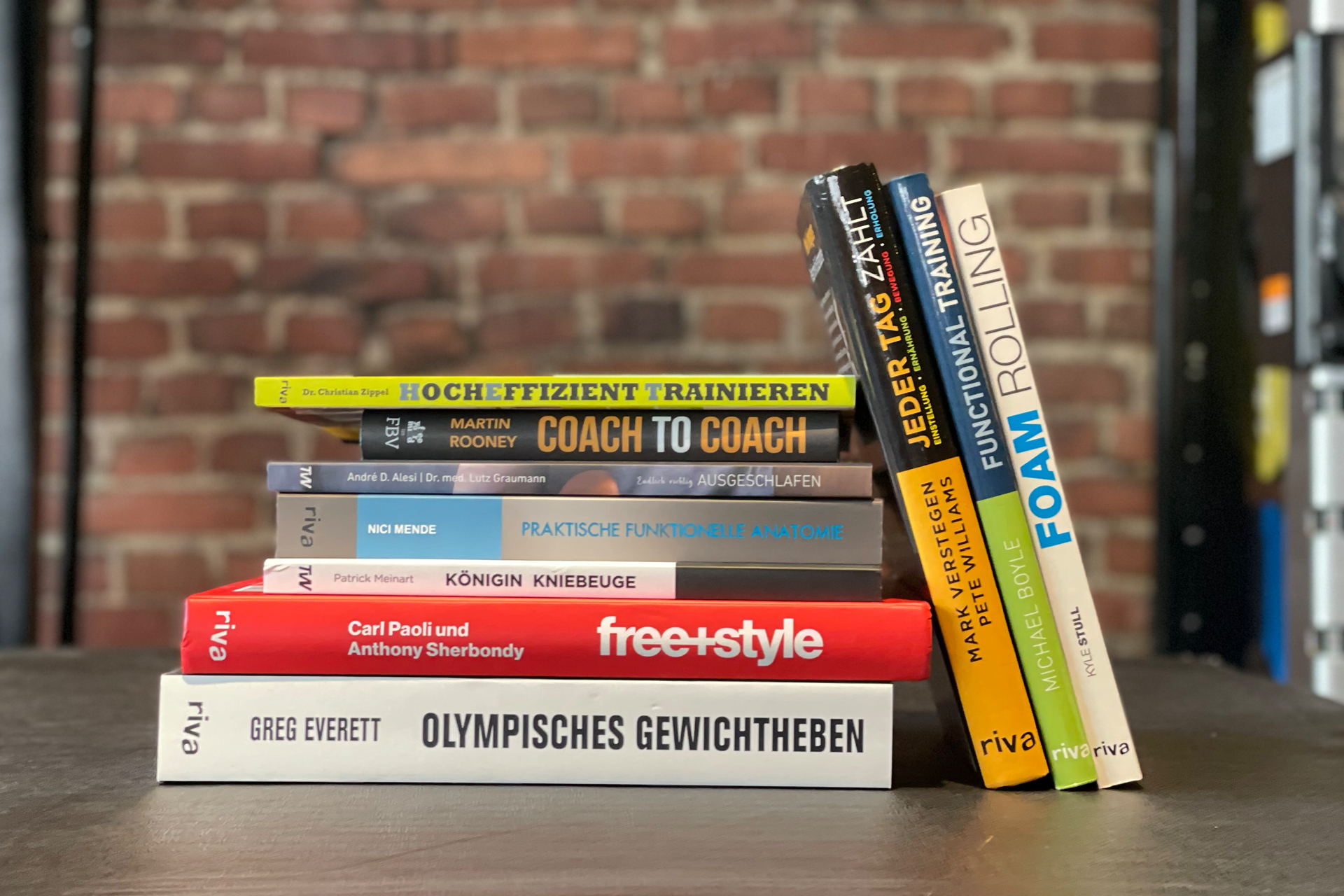
With Calisthenics, you can achieve many goals. Above all, you strengthen your tendons, ligaments and muscles with the training. However, it takes a lot of practice before you can fully master free exercises and train safely. Books are a good way to learn more.
Our Book Recommendations
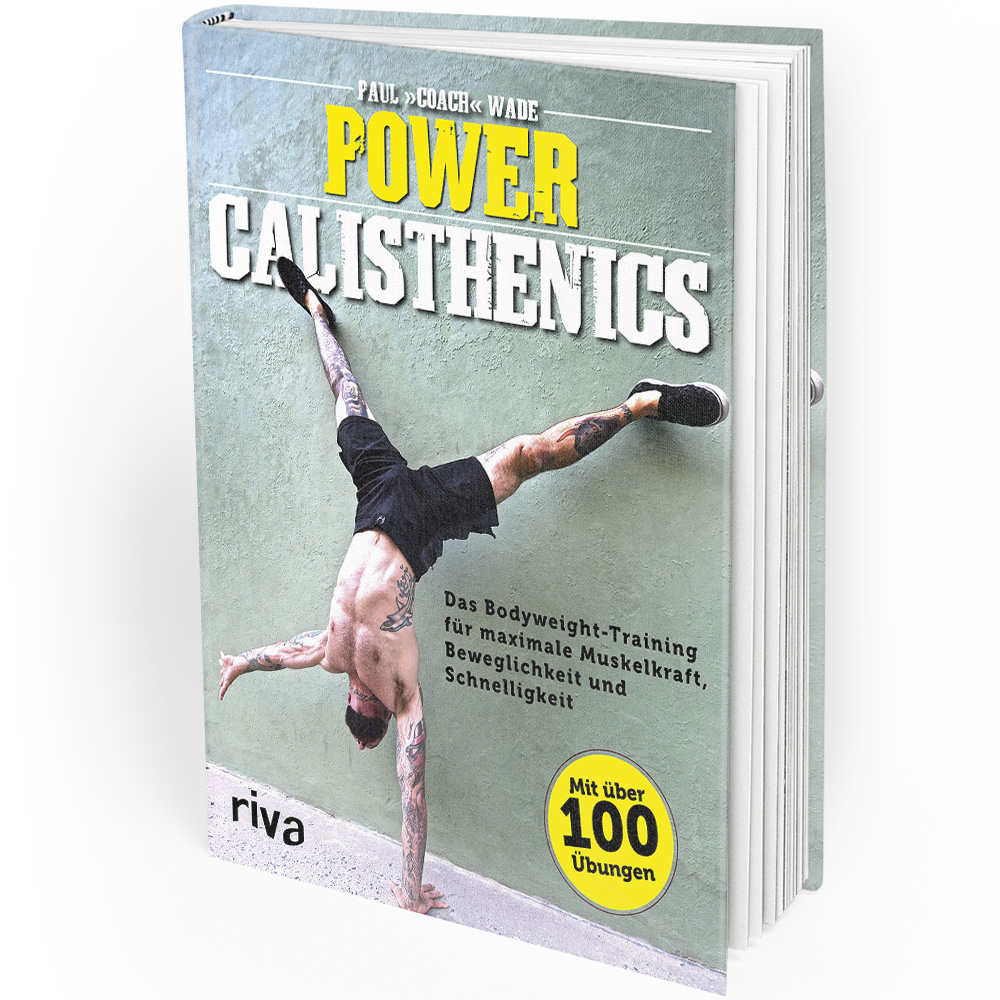
Contents:Calisthenics, street workout using your own body weight, is perfect for building muscle and improving overall fitness. Bodyweight training expert Paul Wade, known for his unconventional, progressive methods since the publication of his bestseller *Train Like a Convict*, takes calisthenics to a whole new level. If you too want the full package – to be fast, strong, resilient and agile – his programme is just the thing for you. With explosive jumps, power push-ups, kip-ups, forward and backward rotations, and dynamic swings, you can take your calisthenics skills to the next level. Across ten levels, you’ll progress from beginner to master, moving from simple exercises to suicide jumps, front flips and muscle-ups. Wade shows you how to plan your training properly, use sets and reps effectively, and progress from one stage to the next – until you’ve reached your goal: maximum muscle strength, flexibility and speed!About the author:Paul “The Coach” Wade spent almost two decades of his life in some of America’s toughest prisons. There, in extremely confined spaces, he perfected strength training using his own body weight. After his release, he published his bodyweight training programme in the bestsellers *Train Like a Convict* and *Train Like a Convict 2*.Read an extract
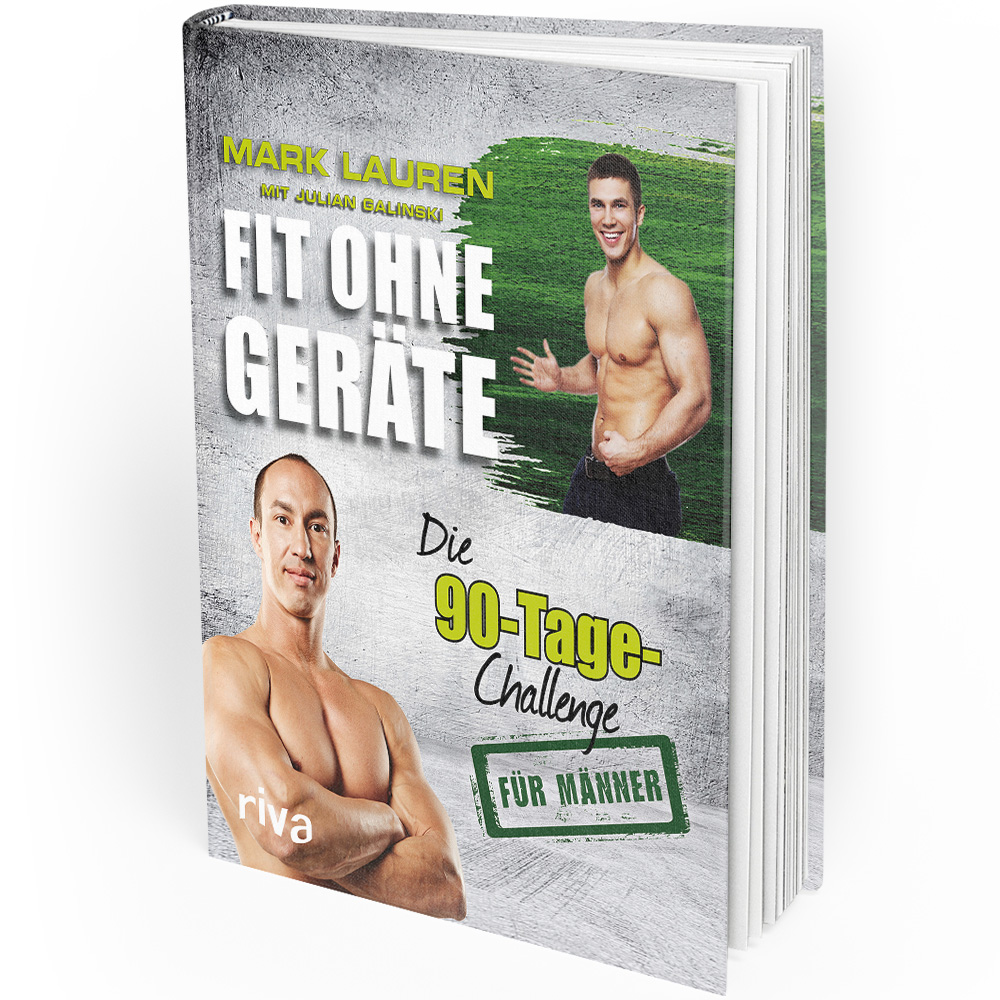
The 90-Day Challenge for MenFitness without equipment is the most successful and efficient fitness formula of our time. Millions of people worldwide train using Mark Lauren’s tried-and-tested concept: no equipment, anywhere, using only your own body weight as resistance. This new intensive programme is even easier to follow and has been specifically designed to help you get the very best out of yourself in three months. You don’t need to put together any exercises or training plans yourself, as the 90-Day Challenge specifies exactly what to do and how to train, day by day. It also includes a nutrition plan perfectly tailored to the programme, as well as lifestyle tips from fitness guru and bestselling author Mark Lauren. Now it’s time to stick with it! In 90 days, you’ll be amazed at the incredible changes that bodyweight training and the right diet can achieve in such a short time. About the author Mark Lauren is a certified physical training instructor in the US military and, in this role, has prepared over 700 elite soldiers for their deployments with Special Operations. He is constantly on the move and lives wherever he is needed as a trainer and instructor. In his spare time, he trains in triathlon and Muay Thai. He competes at a professional level in Thai boxing. His book *Fit ohne Geräte* was one of the best-selling German fitness books in 2011.Read an extract