

This blog is about the optimum posture during acceleration and braking
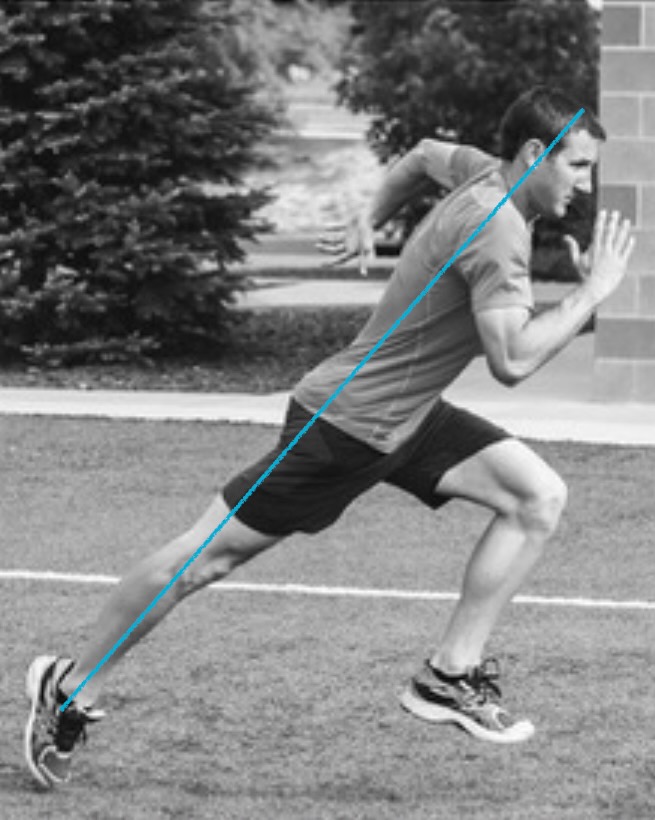
The acceleration phase:
Acceleration from a standing or moving position is essential in sport. A key to acceleration when running forwards is the triple extension in the joints (triple extension), which is characterised by a coordinated and powerful extension of the ankle, knee and hip (2).
Force application:
Newton's third law of motion states, "for every action force there is an equal and opposite reaction force" - applies: the more ground reaction forces the athlete can generate in the limited time their foot touches the ground, the faster they should be able to move their body in the desired direction.
This powerful chain enables the athlete to move their body forwards explosively and generate high ground reaction forces (GRF).
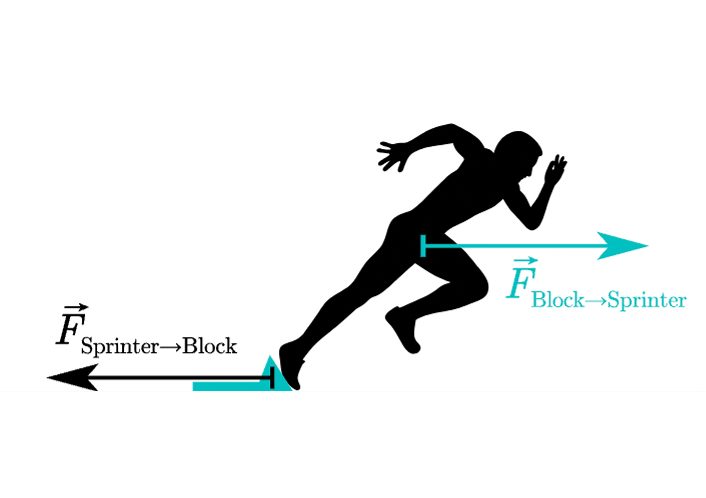
Example: Action-reaction of the sprinter from the starting block:
The sprinter's feet exert a force backwards on the starting block (action).𝐹 —> starting block k
The reaction of the starting block sets the runner in motion. The starting block would actually move in the opposite direction, but does not do so visibly as it is (relatively) firmly attached to the ground. So although a force acts on the starting block and the earth, the mass of the starting block and the earth is so great that the acceleration is backwards.
A = F / M
F Force - force is measured in Newtons.
N M= Mass is measured in kilograms, kg.
A = Acceleration is measured in metres per second squared, m/s2.
The same principle applies to kicking off on the ground and for training with changes of direction (COD) or lateral movements.
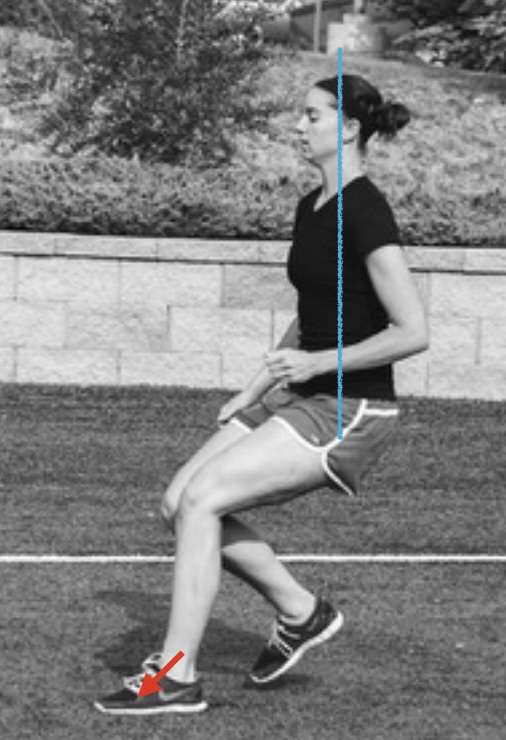
The braking phase:
Successful slowing down and stopping in sport/games enables athletes to initiate a change of speed.
For example, to change direction or come to a standstill.
The key to decelerating the body in order to optimise speed reduction lies in a triple flexion position, reciprocal to acceleration.
This position is characterised by flexion of the ankles, knees and hips. The greater the braking force the athlete can generate, the faster they can reduce their body speed in order to stop, reposition themselves or prepare for the next movement.
The faster the movement, the greater the braking force.
Body posture
During acceleration, the athlete's centre of gravity should be in front of the standing surface (i.e. the feet). This allows an optimal body position for the generation of GRF to increase horizontal propulsion. In this position, the coach should be able to draw an imaginary line that intersects the ears and passes through the torso, hip, knee and ankle of the supporting leg. At this point, just before the foot touches the ground, the athlete's knee is fully extended. The athlete's head should be in line with the torso and the torso in line with the legs during the linear acceleration movement.
"Triple extension" - triple extension ankle - knee - hip
When slowing down or braking, the forward lean that occurs when accelerating is not visible. This is because the upper body has to adopt a more upright posture than the lower body and leans more backwards when braking to reduce body momentum. This shifts the centre of gravity of the upper body back towards the base of the support. This allows the lower body to adopt a better position in order to slow down the horizontal movement generated during acceleration.
Arm movement
The athlete should be instructed to keep their arms bent at around 90 degrees when accelerating. Optimising the backward swing of the arms promotes the stretch reflex and provides a large part of the power required to propel the body. The arms should not cross the centre line of the body at the front in order to counteract the rotational forces of the lower extremities.
As a general rule, the longer the athlete's stride length, the greater the arm swing, as arm and leg speed are interdependent. In other words: the greater the arm swing, the greater the stride length (and vice versa). The ideal stride length and therefore also the optimum arm swing at maximum stride frequency determines the speed.
During deceleration, the arms continue to move mainly in the sagittal plane (they swing back and forth). The range of motion in the shoulder and the amplitude of the arm swing are reduced as soon as shorter steps are used to decelerate the body or to prepare for a change of direction. In the sideways movement or in the athletic position, the arms should be at the side of the body.
Leg action
Acceleration
As mentioned earlier, explosive jumps require synchronised extension of the hip, knee and ankle to produce GRFs. During acceleration drills, athletes should be instructed to keep the ankle in a dorsiflexed position and perform a "punch and drive" action (knee extension with explosive ground contact). During the push-off, the athlete's weight should be on the ball of the foot. This minimises the braking forces and maximises the propulsive force. The angle of the athlete's shins to the ground is acute at the start (less than 90 degrees) and increases slightly with each step. During acceleration, the stride length is initially short; the more the athlete accelerates, the longer the stride becomes. The ground contact time is greatest during the first stride and decreases as the stride length increases. Similarly, the stride frequency starts slowly due to the initially longer ground contact time required to overcome the inertia and increases with each stride. The aim is to reach the maximum stride frequency in the shortest possible time.
Braking movement
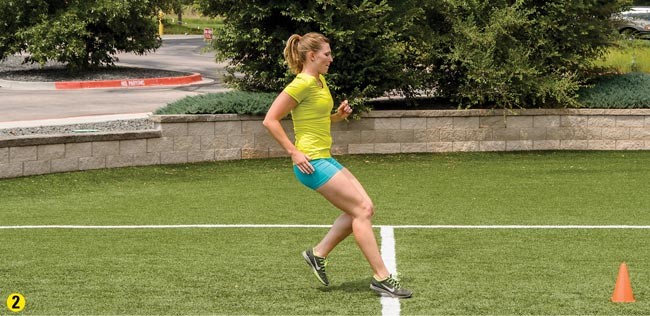
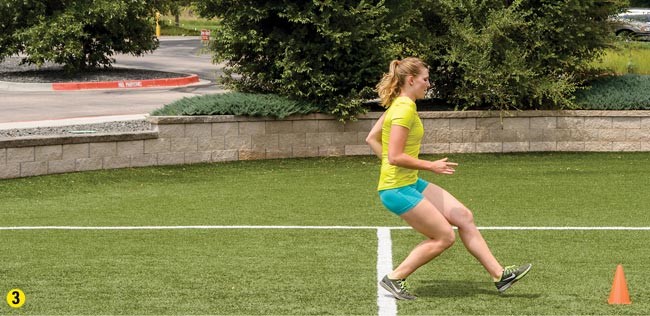
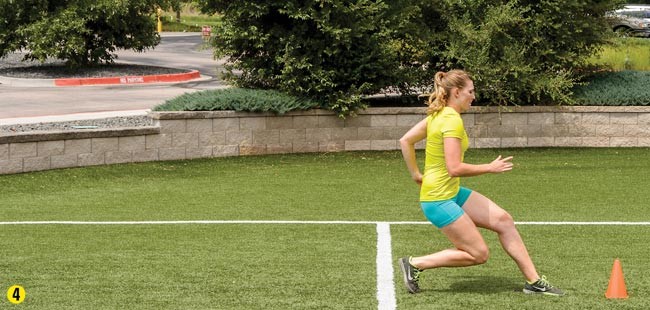
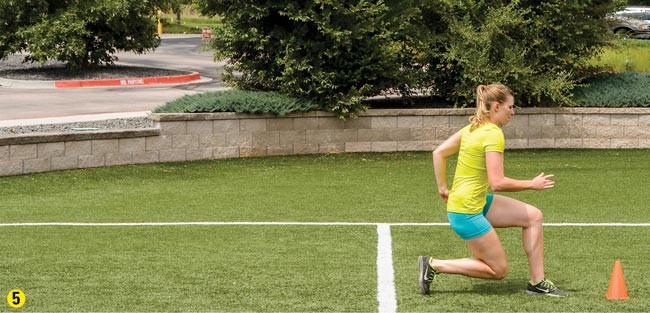
The opposite is true for braking:
The athlete's weight should be shifted to the heel when the foot touches down in order to reduce the propulsive force and maximise the braking force. The angle between the athlete's shins and the ground is initially greater than 90 degrees and becomes slightly smaller with each step. The time of ground contact increases as the athlete attempts to slow down and prepares to assume a preparatory position or transition to another movement, such as a crossover, sideways step or backwards movement.
Quellen

Our highlights for your workout
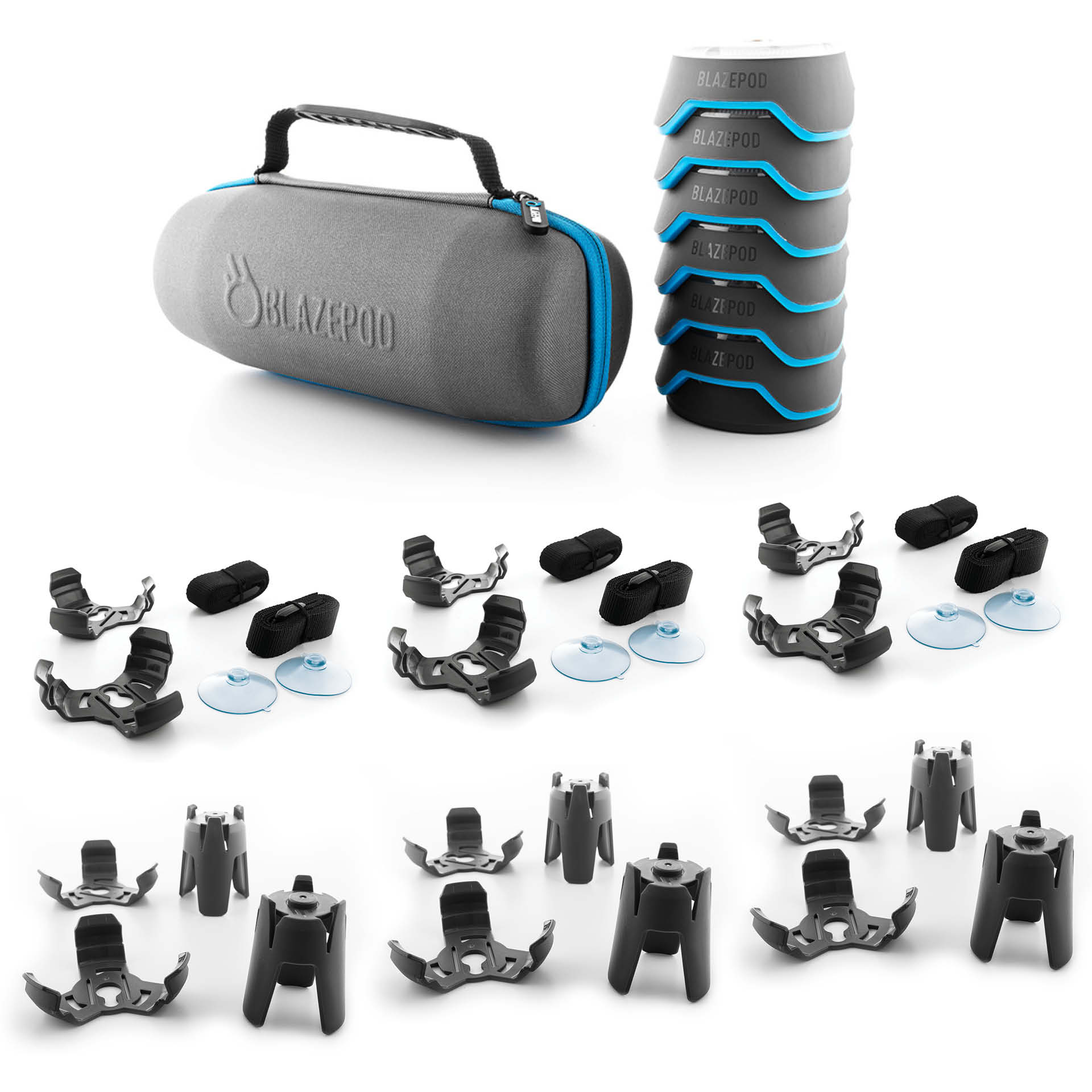
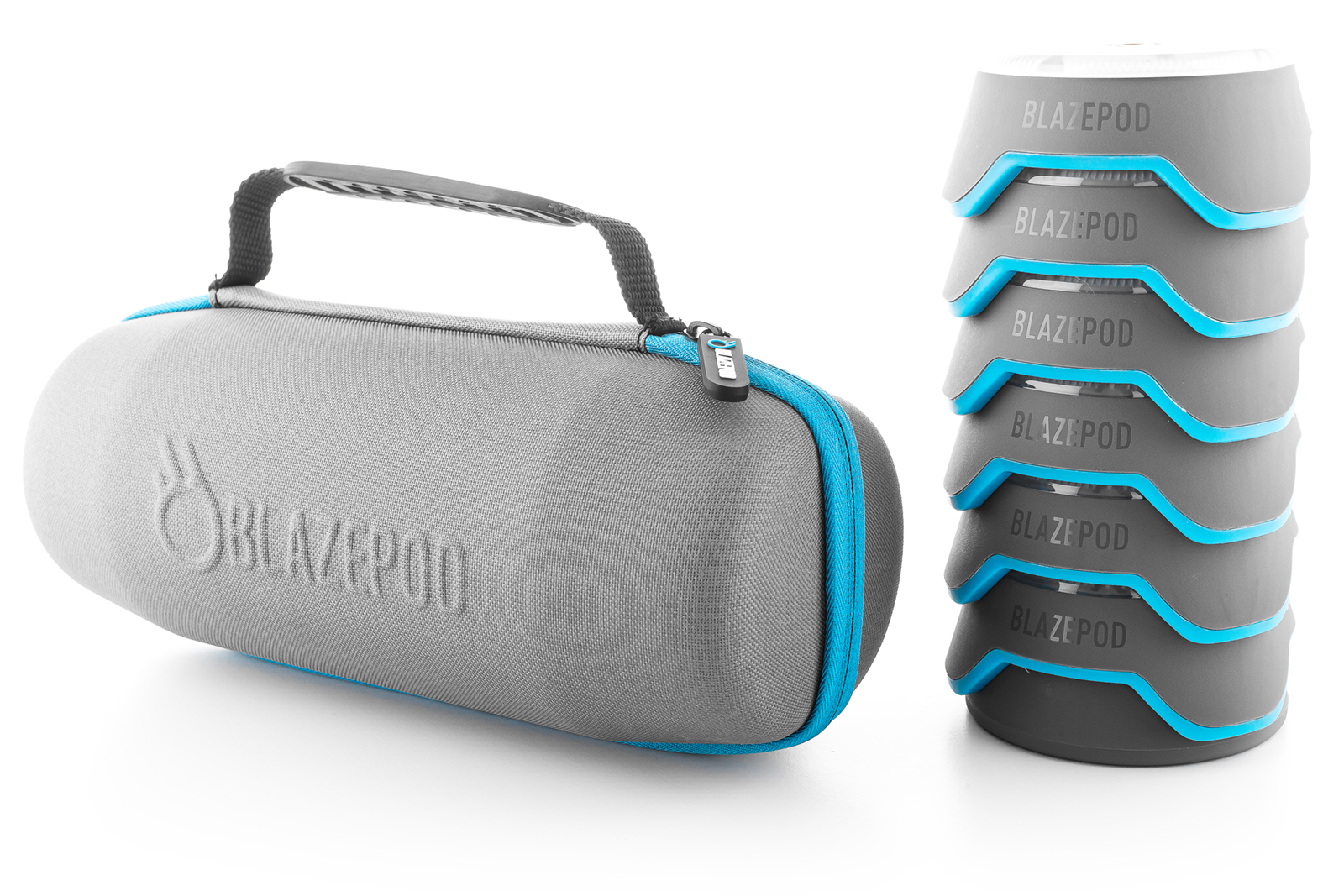
Product information: BlazePod Bundle Trainer (set)The ideal solution for coaches, therapists and personal trainersBlazepods are a versatile training tool that can help improve your performance across a wide range of areas. The configurable lighting on the pods stimulates key neuromotor processes, thereby training quick changes of tactics and reaction skills in a playful way. The BlazePod app allows you to configure the pods and run numerous training programmes. With the right settings, you can create a targeted and effective training programme. The BlazePods’ intelligent sensor system provides highly accurate tracking of performance, offering valuable feedback for evaluating and adapting your training. Blazepods product features: High-performance LEDs with up to 8 colour options Durability: Water-resistant (IP65), UV-protected Compact and lightweight design Up to 8 hours’ operating time on a single battery charge Intelligent charging via stacking Bluetooth communication with a range of up to 40 metres The Functional Adapter Kit and Cone Adapter Kit allow you to make your training with the Blazepods more creative. The suction cups and straps offer numerous mounting options in virtually any training environment and enable you to design a wide variety of training scenarios. The range of applications for the Blazepods can be expanded, particularly in ball sports or competitive sports, using the cone adapters. Contents: 6 pods 1 x charging station 1 USB charging cable (can be used with standard mains adaptors with a USB port for 110V and 220V) 1 BlazePod case 12 x functional adapters 6 cone adapters 6 suction cups 6 straps Find out more about the differences between the BlazePod GO and Pro versions.Compare versions*BlazePod app information: Access to the GO app version is free. PRO access costs €9.99 per month or €99.99 per year in the first year. From the second year onwards, the price for PRO access is €14.99 per month or €149.99 per year.
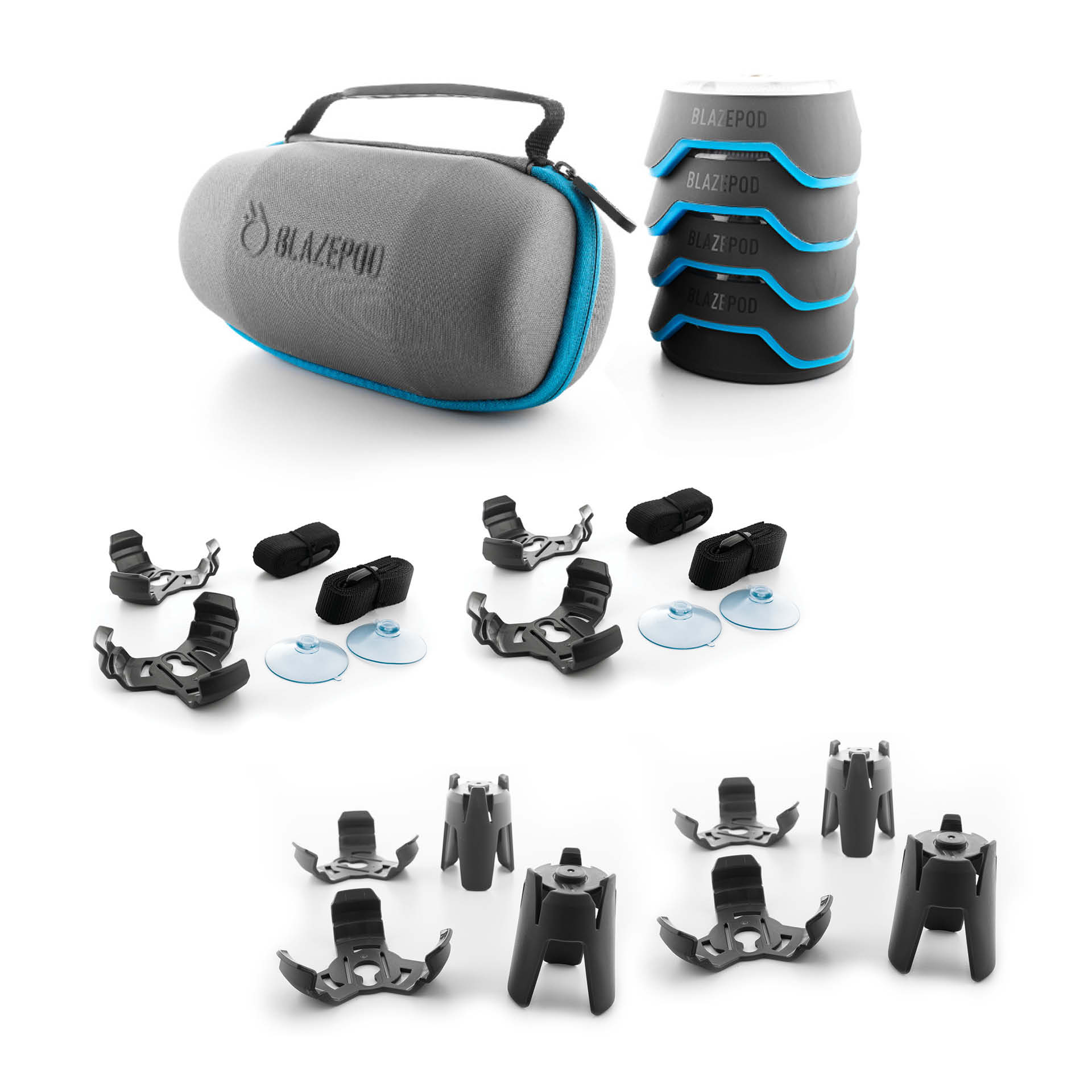
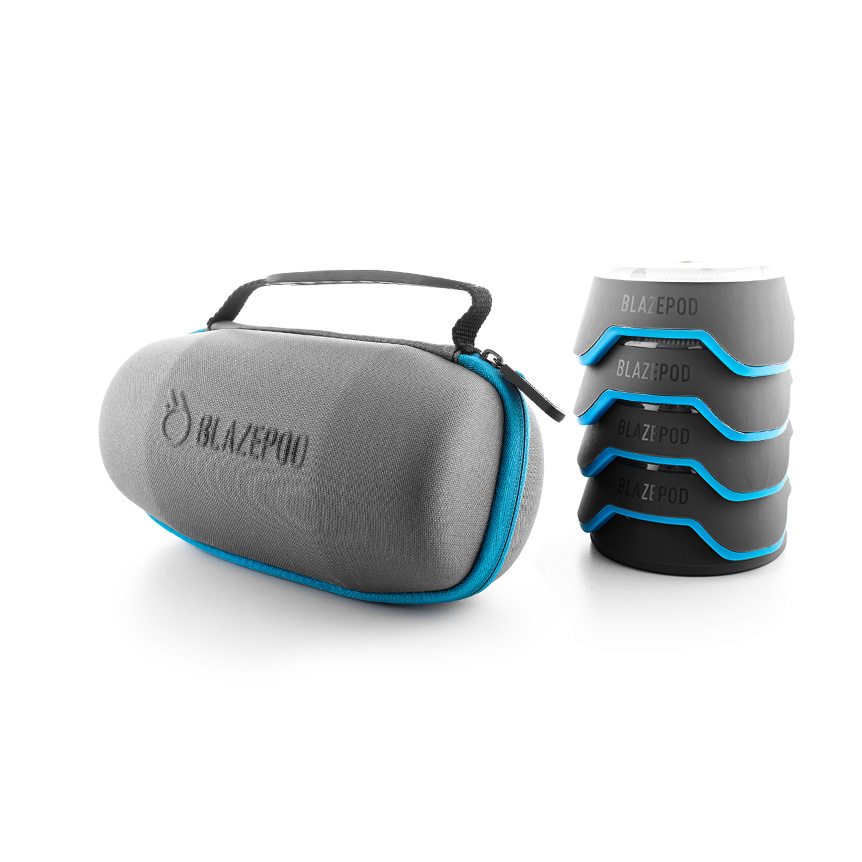
Product information: BlazePod Starter Bundle (Set)The ideal solution for coaches, therapists and personal trainersBlazepods are a versatile training tool that can help improve your performance across a wide range of areas. The configurable lighting on the pods stimulates key neuromotor processes, thereby training quick changes of tactics and reaction skills in a playful way. The BlazePod app allows you to configure the pods and run numerous training programmes. With the right settings, you can create a targeted and effective training programme. The BlazePods’ intelligent sensor system provides highly accurate tracking of performance, offering valuable feedback for evaluating and adapting your training. Blazepods product features: High-performance LEDs with up to 8 colour options Durability: Water-resistant (IP65), UV-protected Compact and lightweight design Up to 8 hours’ operating time on a single battery charge Intelligent charging via stacking Bluetooth communication with a range of up to 40 metres The Functional Adapter Kit and Cone Adapter Kit allow you to make your training with the Blazepods more creative. The suction cups and straps offer numerous mounting options in virtually any training environment and enable you to design a wide variety of training scenarios. The range of applications for the Blazepods can be expanded, particularly in ball sports or competitive sports, using the cone adapters. Contents: 4 pods 1 x charging station 1 USB charging cable (can be used with standard mains adaptors with a USB port for 110V and 220V) 1 BlazePod case 8 x functional adapters 4 cone adapters 4 suction cups 4 straps Find out more about the differences between the BlazePod GO and Pro versions.Compare versions*BlazePod app information: Access to the GO app version is free. PRO access costs €9.99 per month or €99.99 per year in the first year. From the second year onwards, the price for PRO access is €14.99 per month or €149.99 per year.
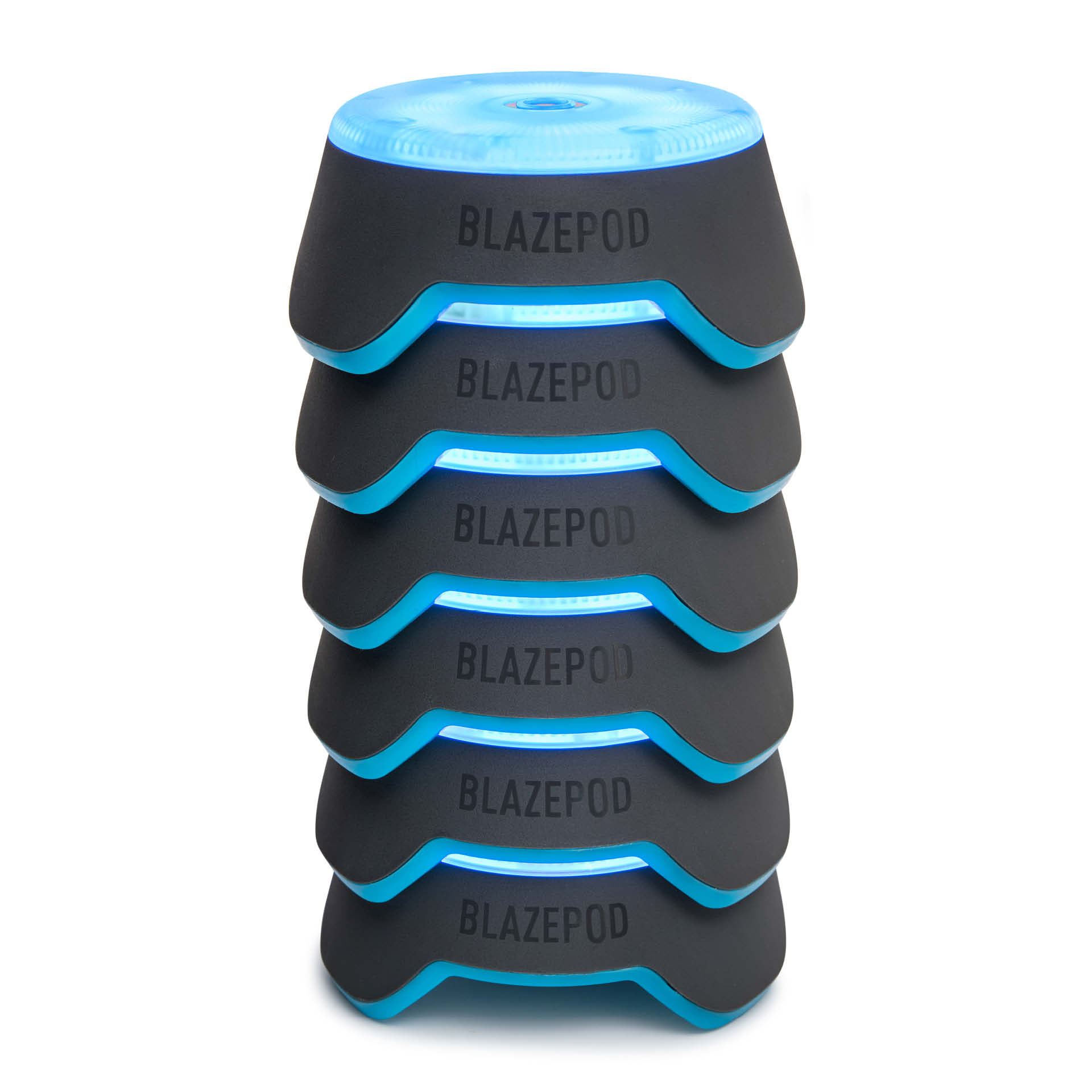
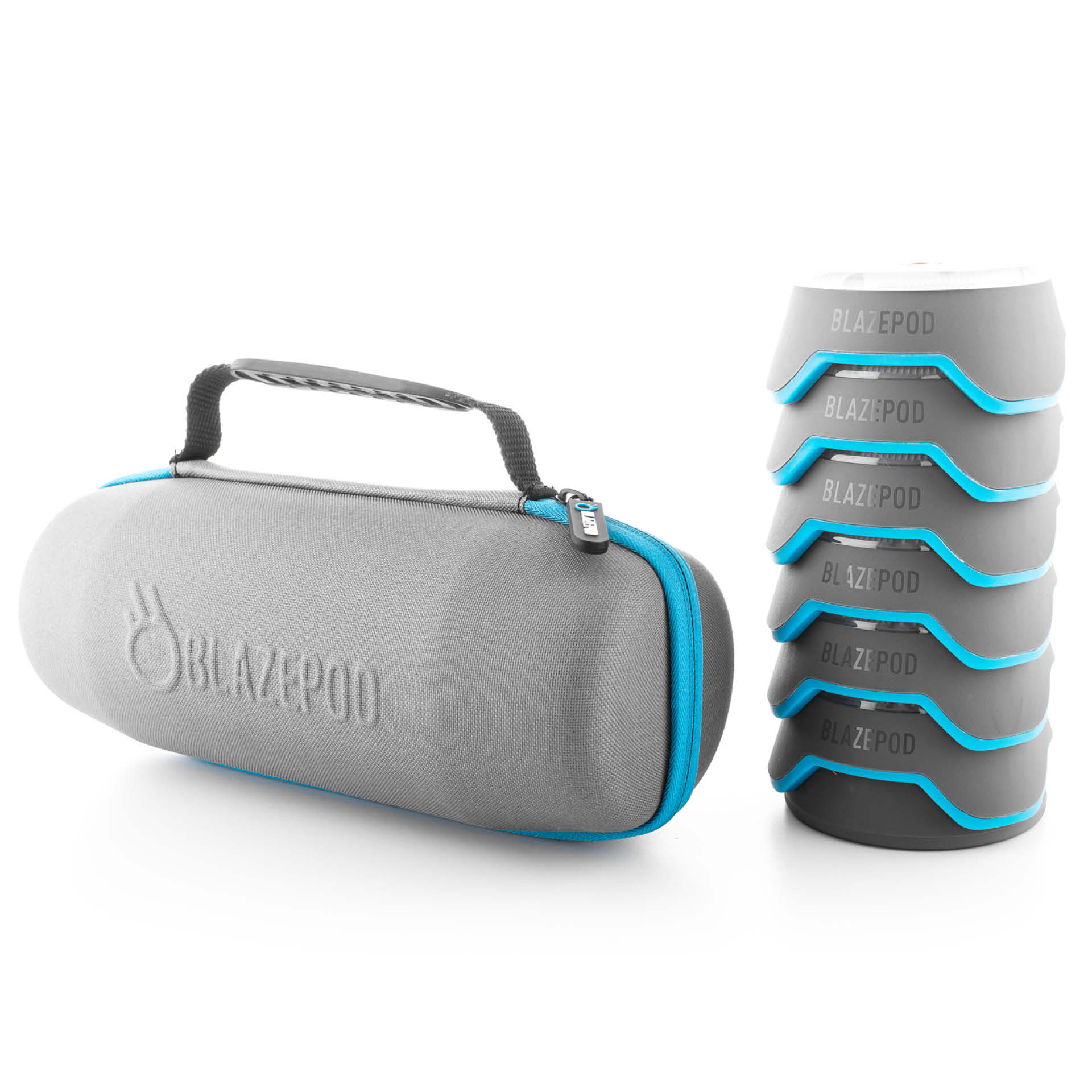
Product information: BlazePod Trainer KitGet the BlazePod Trainer Kit for effective light reflex training High-performance LEDs for versatile training The BlazePods in the BlazePod Trainer Kit feature high-performance LEDs with up to 8 colour options. This allows you to design a versatile and motivating flash reflex training programme that helps your clients achieve peak performance. Durable and weatherproof for any environment The reflex training lights are water-resistant (IP65) and UV-protected, ensuring they’re built to last. Whether indoors or outdoors, in sun or rain – the BlazePods can withstand any environment. Compact and lightweight for maximum flexibility The compact and lightweight design of the BlazePods allows for easy handling and maximum flexibility during reaction training or cognitive training. You can easily position the pods around the room and create personalised exercises and challenges for your clients. Long battery life and easy charging On a single battery charge, the BlazePods offer an impressive 8 hours of operating time. Thanks to the smart stacking charging process, you can recharge the pods quickly and easily, ensuring they’re ready for use at any time. Bluetooth connectivity for convenient control The BlazePods enable Bluetooth communication with a range of up to 40 metres. This allows you to conveniently control and adjust the pods to tailor the workout to your needs. Comprehensive contents for an immediate start The BlazePod Trainer Kit includes 6 pods, the charging station (Podbase), a USB charging cable and the handy BlazePod Case for safe storage and transport of the pods. This means you can start your BlazePod training straight away. BlazePod app – training programmes for optimal results Use the BlazePod app to benefit from a wide range of training programmes. Achieve maximum results and boost your clients’ performance. Find out more about the differences between the BlazePod GO and Pro versions.Compare versions Get the BlazePod app*: iOS Android Product details: High-performance LEDs with up to 8 colour options Water-resistant (IP65), UV-protected Compact and lightweight design Up to 8 hours’ operating time on a single battery charge Smart charging via stacking Bluetooth communication with a range of up to 40 metres Contents: 6 pods, 1 charging station (PodBase), 1 USB charging cable (can be used with standard mains adaptors with a USB port for 110V and 220V), 1 BlazePod Case Go to the manual *BlazePod App Information: Access to the GO App version is free. PRO access costs €9.99 per month or €99.99 per year in the first year. From the second year onwards, the price for PRO access is €14.99 per month or €149.99 per year
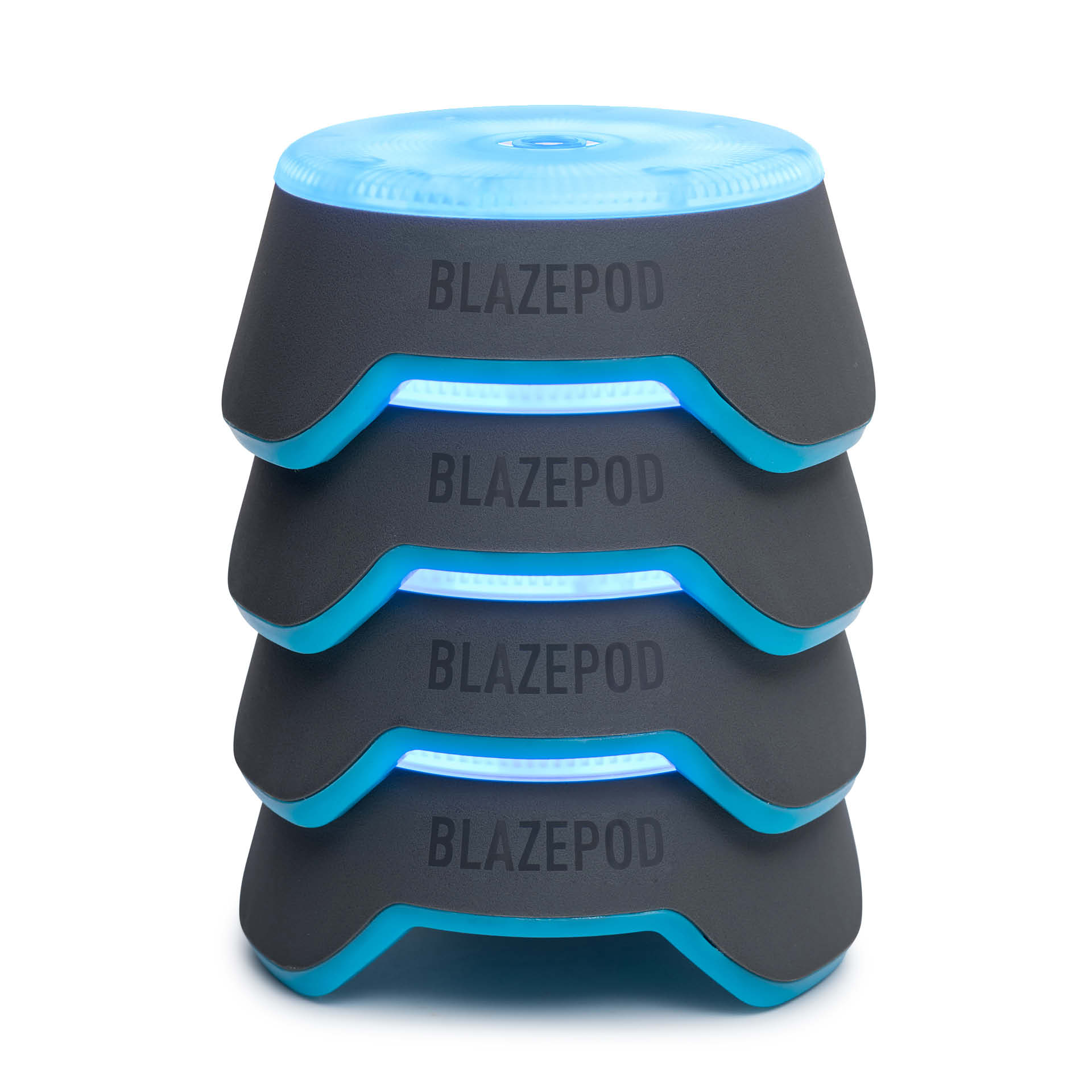
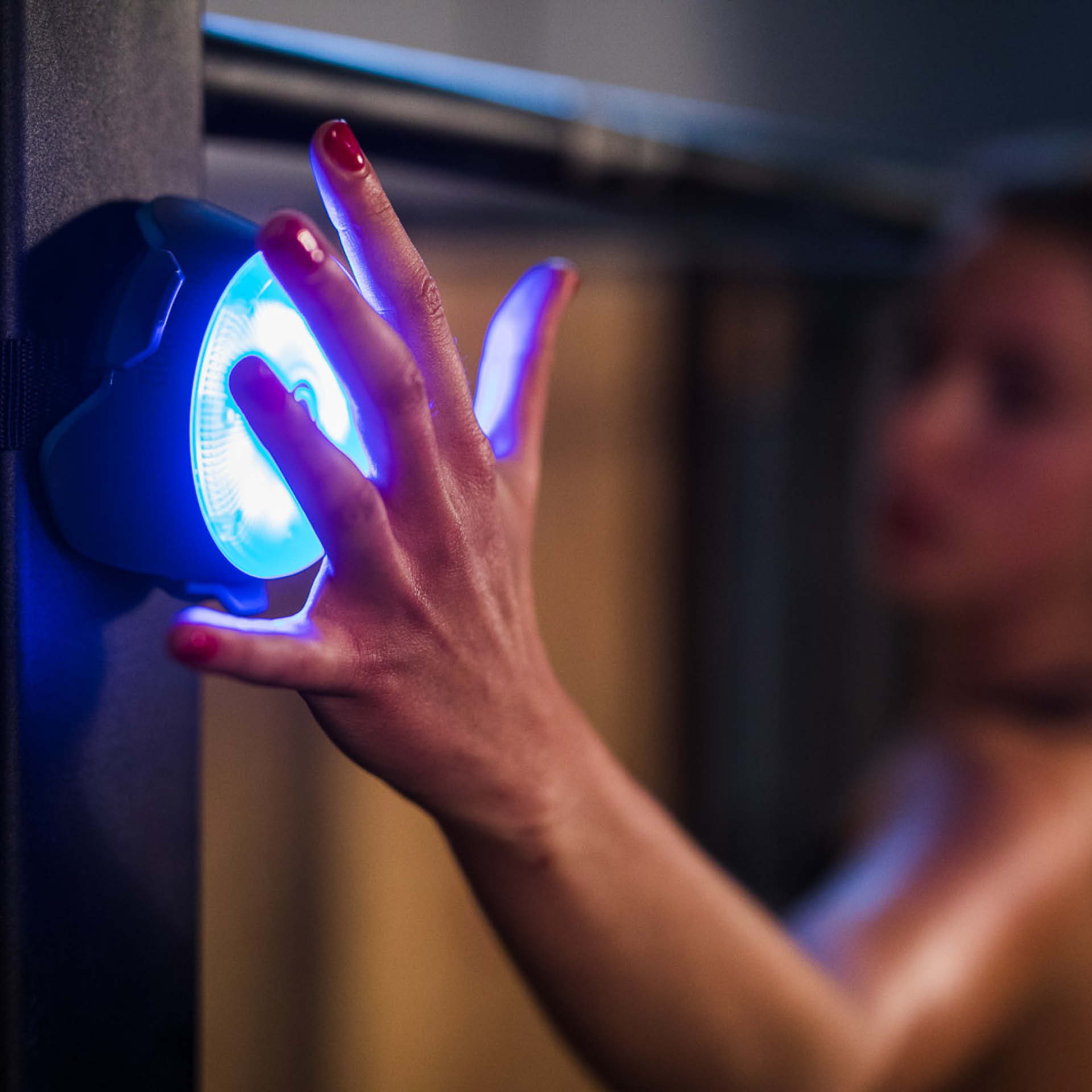
Product information: BlazePod Starter KitGet the BlazePod Starter Kit for effective light reflex training Powerful LEDs for versatile training The BlazePods in the BlazePod Starter Kit feature high-performance LEDs with up to 8 colour options. This allows you to design versatile and motivating flash reflex training that helps your clients achieve peak performance. Durable and weatherproof for any environment The reflex training lights are water-resistant (IP65) and UV-protected, ensuring they’re built to last. Whether indoors or outdoors, in sun or rain – the BlazePods can withstand any environment. Compact and lightweight for maximum flexibility The compact and lightweight design of the BlazePods allows for easy handling and maximum flexibility during reaction training or cognitive training. You can easily position the pods around the room and create personalised exercises and challenges for your clients. Long battery life and easy charging On a single battery charge, the BlazePods offer an impressive 8 hours of operating time. Thanks to the smart stacking charging process, you can recharge the pods quickly and easily, ensuring they’re ready for use at any time. Bluetooth connectivity for convenient control The BlazePods enable Bluetooth communication with a range of up to 40 metres. This allows you to conveniently control and adjust the pods to tailor the workout to your needs. Comprehensive contents for an immediate start The BlazePod Starter Kit includes 4 pods, the charging station (Podbase), a USB charging cable and the handy BlazePod Case for safe storage and transport of the pods. This means you can start your BlazePod training straight away. BlazePod app – training programmes for optimal results Use the BlazePod app to benefit from a wide range of training programmes. Achieve maximum results and boost your clients’ performance. Find out more about the differences between the BlazePod GO and Pro versions.Compare versionsGet the BlazePod app*: iOS Android Product details: High-performance LEDs with up to 8 colour options Water-resistant (IP65), UV-protected Compact and lightweight design Up to 8 hours’ operating time on a single battery charge Smart charging via stacking Bluetooth communication with a range of up to 40 metres Contents: 4 pods, 1 charging station (PodBase), 1 USB charging cable (can be used with standard mains adaptors with a USB port for 110V and 220V), 1 BlazePod Case Go to the manual *BlazePod App Information: Access to the GO App version is free. PRO access costs €9.99 per month or €99.99 per year in the first year. From the second year onwards, the price for PRO access is €14.99 per month or €149.99 per year.
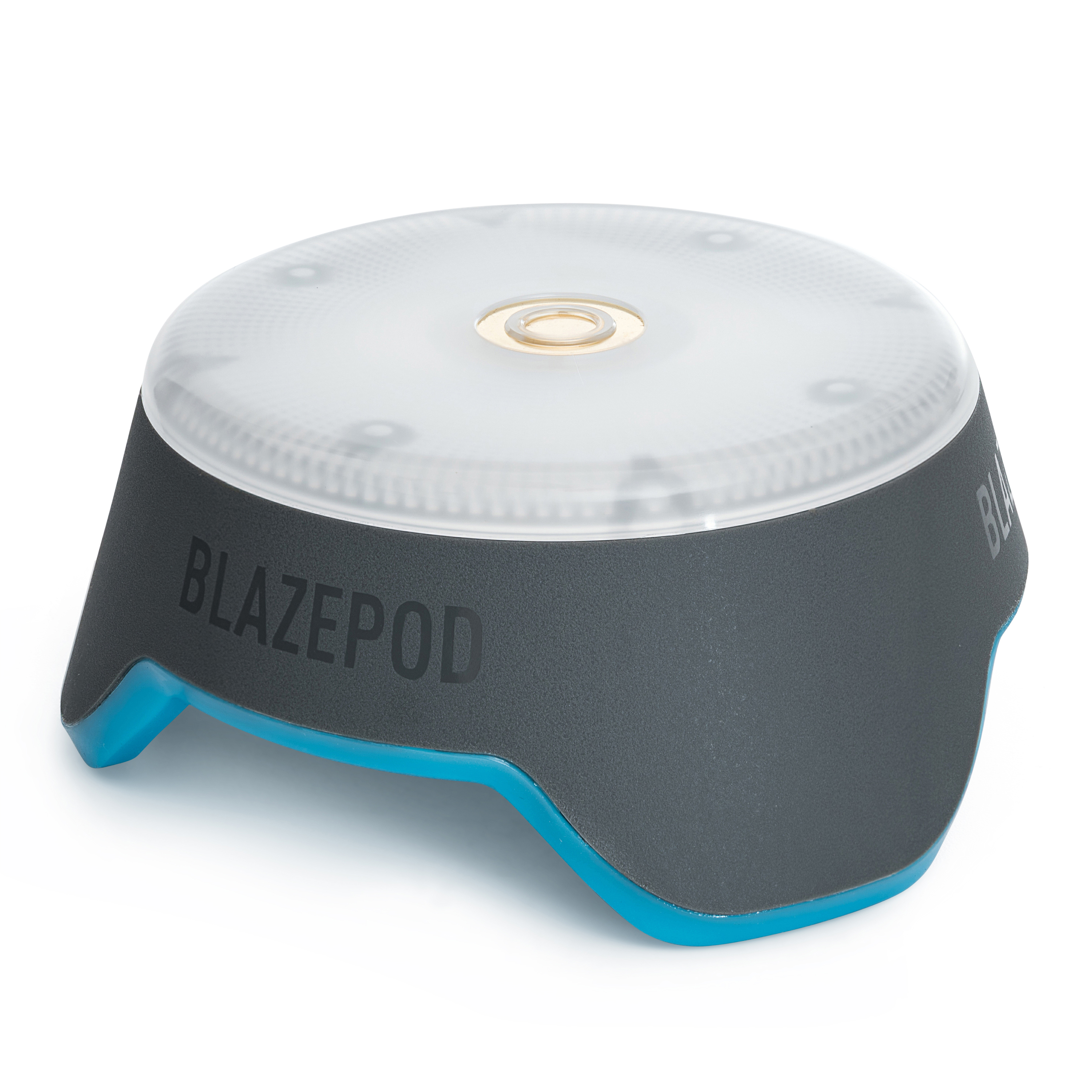
Product information: BlazePod Single Pod (spare part)The perfect way to expand your trainingWith the BlazePod Single Pod, you can upgrade your existing set with additional pods to expand your training options.Product details: Contents: 1 BlazePod Single Pod Note: The charging station and other BlazePod products are not included in the package
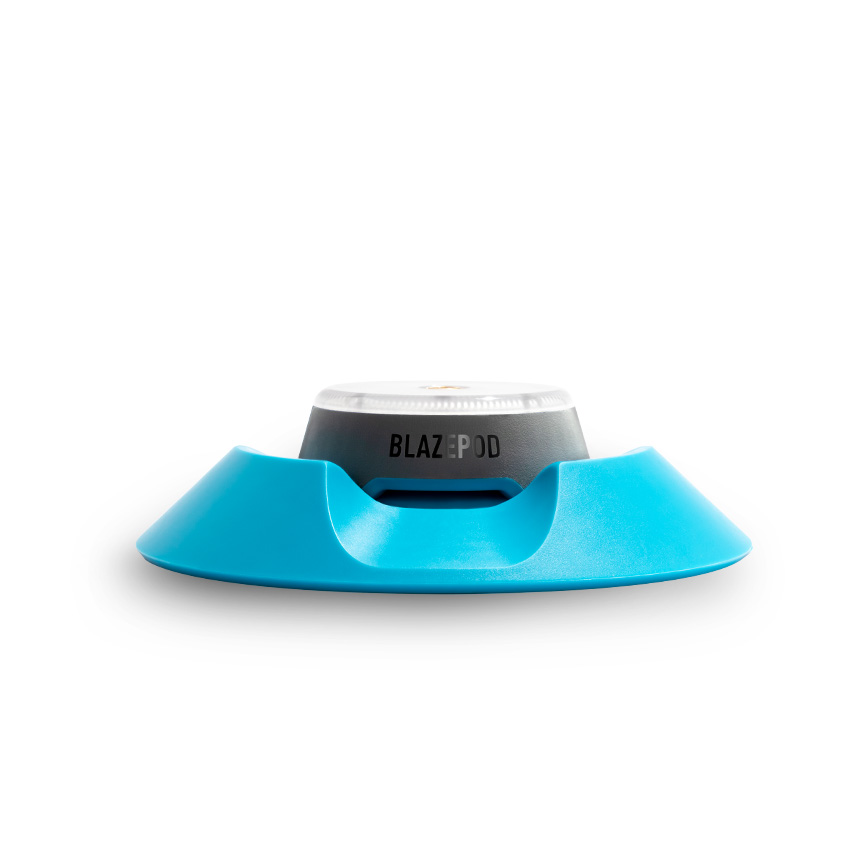
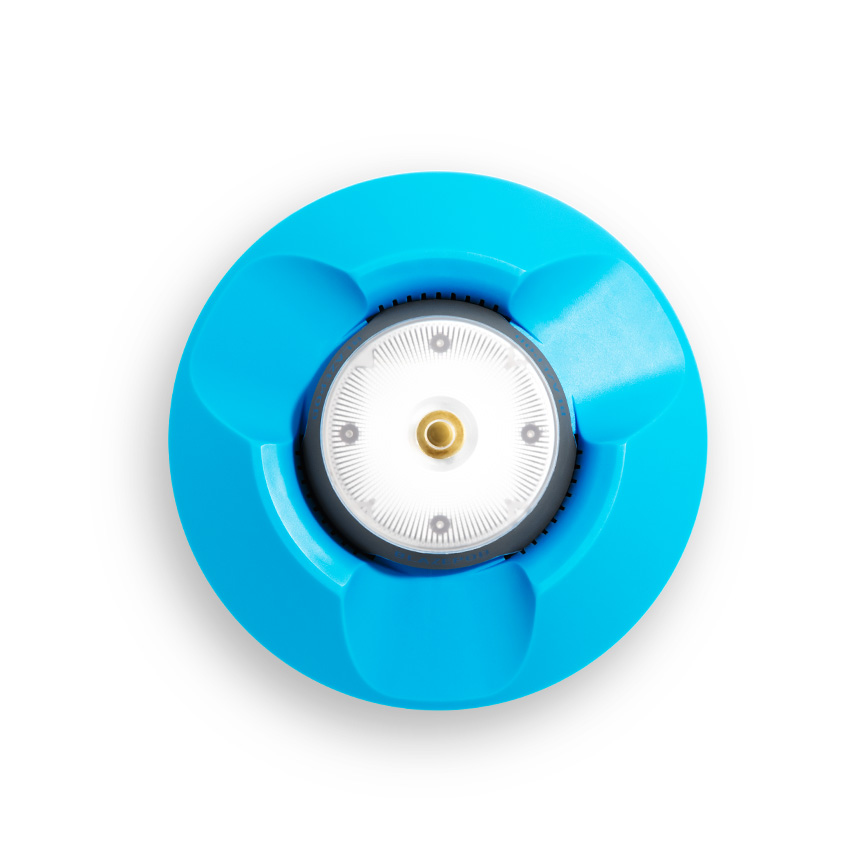
Product information: BlazePod Pod Base Duo (accessory)With this sturdy pod base, your pods will no longer slip or tip over! The BlazePod Pod Base Duo provides a solution to prevent BlazePods from sliding or tipping over during fast-paced exercises, particularly during reaction training.Your Pod sits absolutely securely and stably in the Pod Base. The flat design ensures a firm footing without blocking the light. This means the light remains fully visible during training, making your training easier. Another advantage is that when your Pods are in the Base, they’re protected from dirt or uneven surfaces, which is particularly important for the charging pins on the underside. The BlazePod Pod Base is also perfect for training on ice, as the honeycomb pattern on the underside ensures the Pods don’t freeze to the ice. Product details: Contents: 2 x Blazepod Pod BaseNote: BlazePods are not included
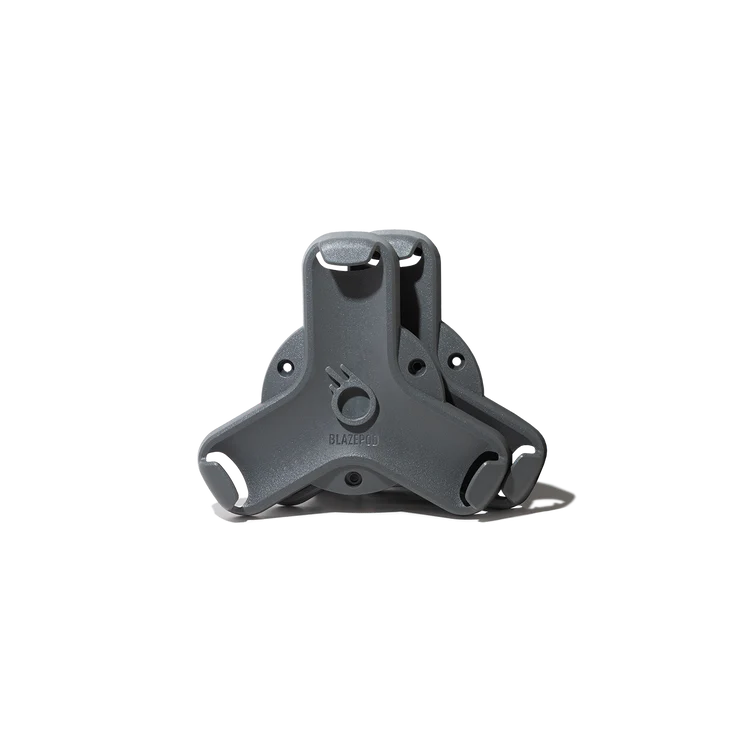
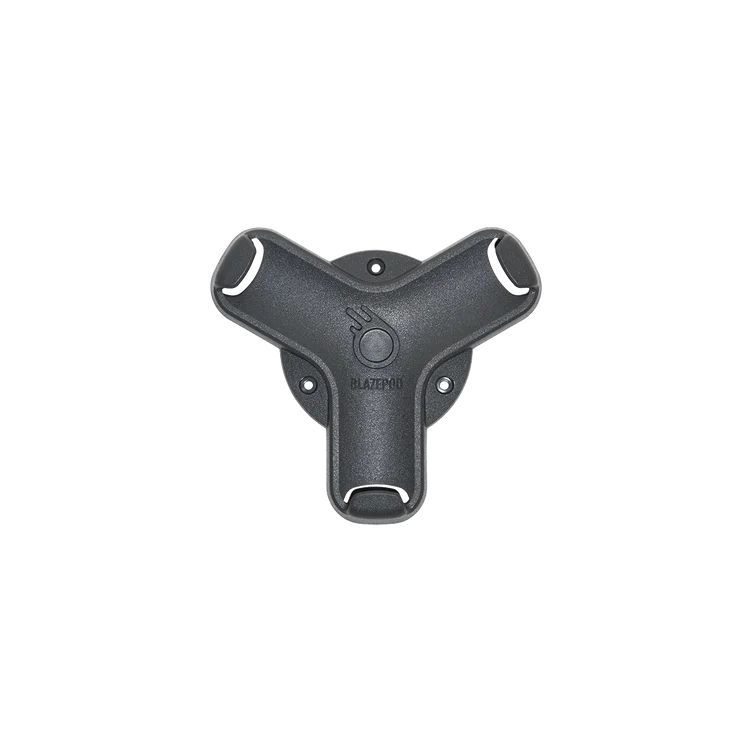
Product information: BlazePod Wall Mount Adaptor Duo (accessory)Secure and space-saving wall mountingAttach your BlazePod securely and permanently to the wall using the®. Enjoy new activities, track and assess your progress with reliable benchmarks, and save space and time thanks to easy access in the gym, team changing room, clinic or classroom. The Pods remain removable, so you can use the BlazePod anytime, anywhere, regardless of the fixed installation of the wall mountsProduct details: 2 x BlazePod Wall Mount AdaptersNote: This product can only be used in combination with the BlazePod Pod Base; this item is not included and must be purchased separately.
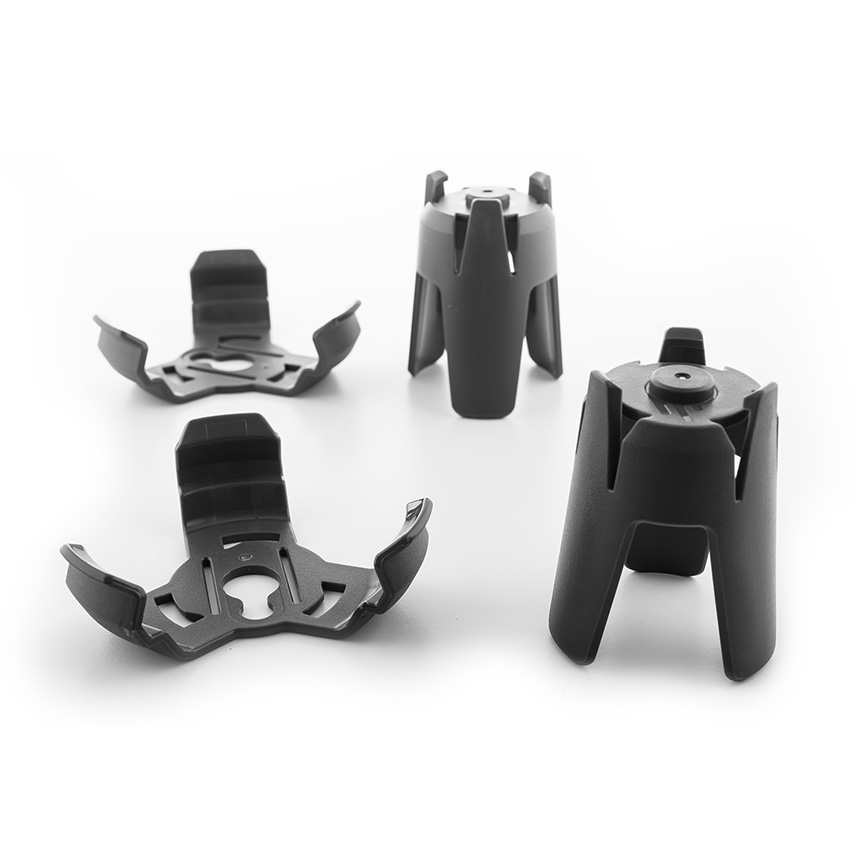
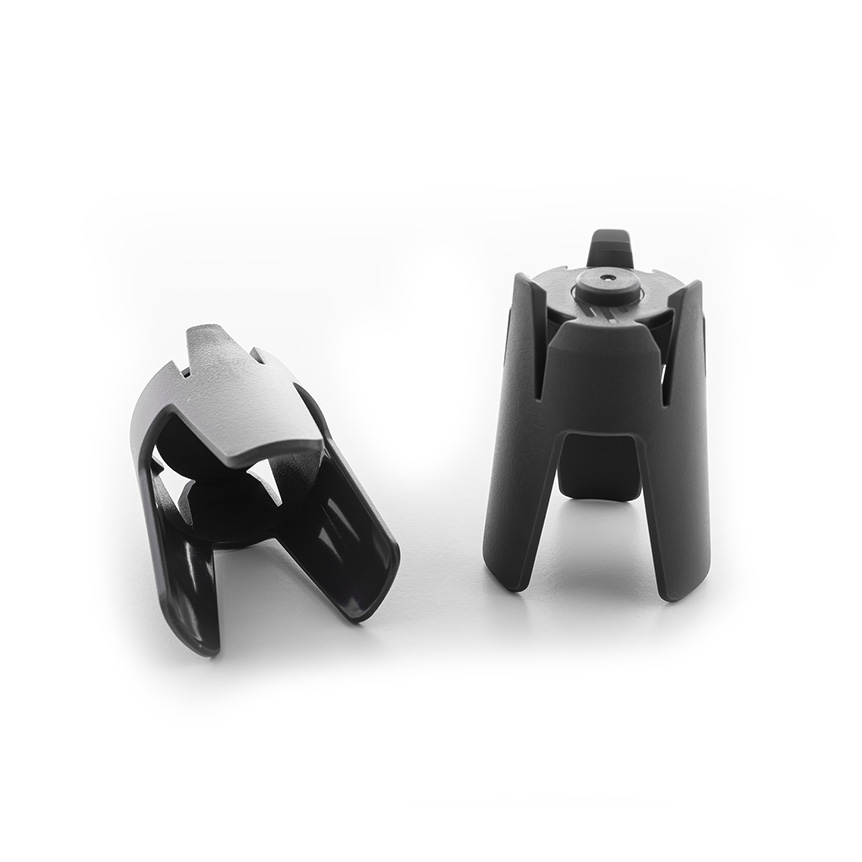
Product information: BlazePod Cone Adapter KitExpand the range of applications in ball sports or competitive sportThe BlazePod Cone Adapter Kit offers an ideal solution for attaching BlazePods to cones during your training. Thanks to the simple installation of the BlazePod Cone Adapter, you can get started with your training quickly and easily. Product details: Contents: 2 x Functional Adapters, 2 x cone adaptors
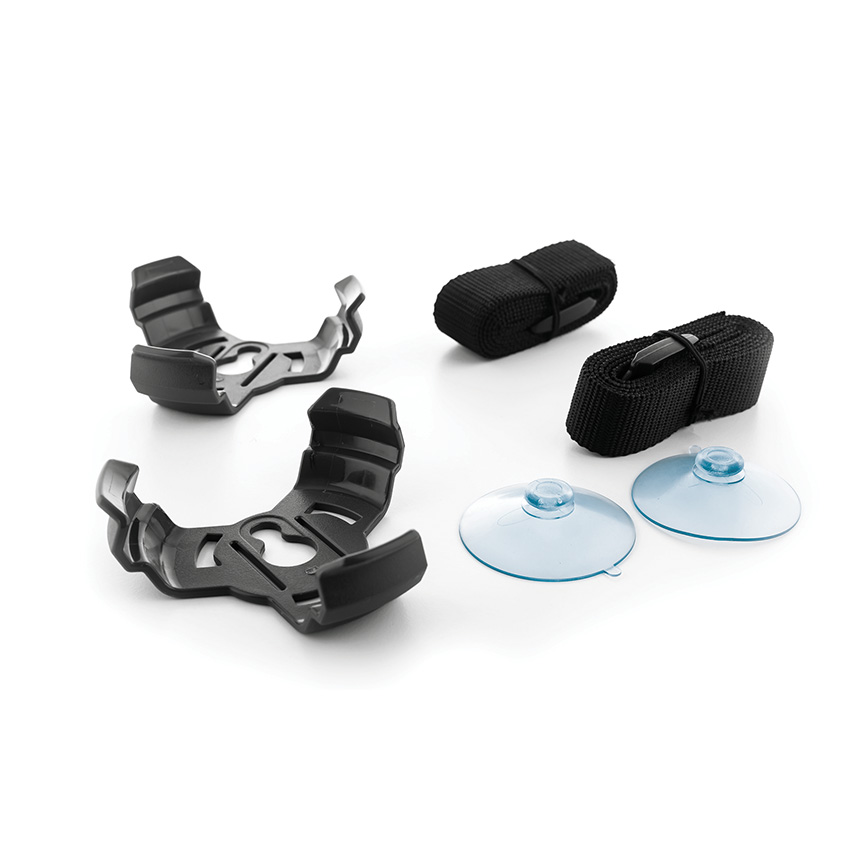
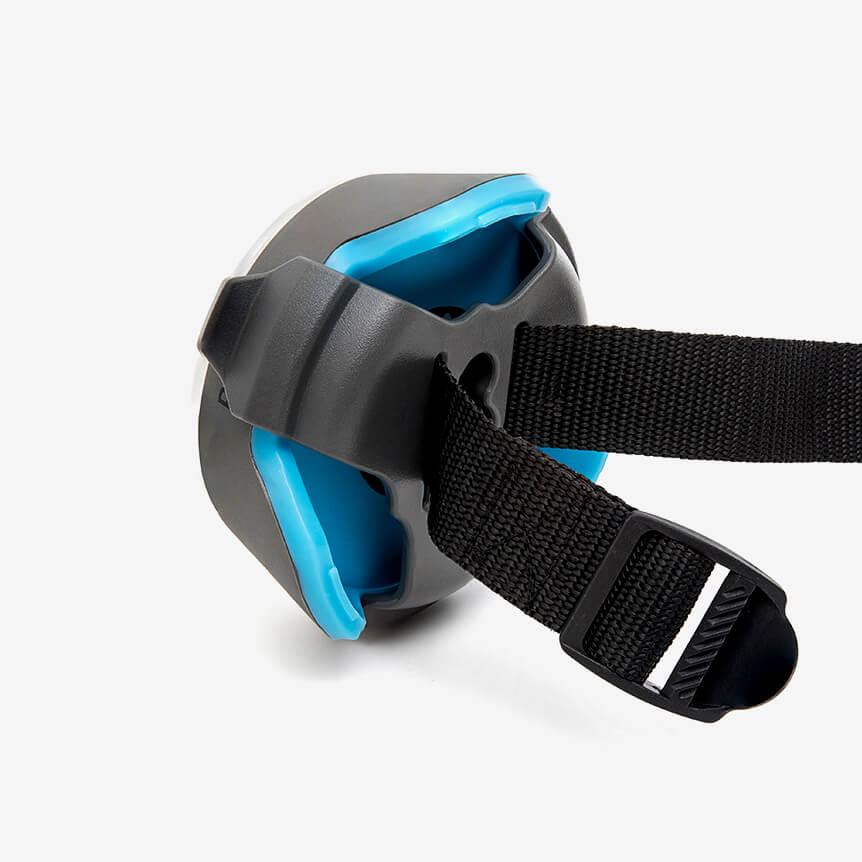
Product details: BlazePod Functional Adapter Kit (accessory)More angles, more possibilities for new stimuli!The Functional Adapter Kit offers versatile ways to attach your BlazePods, thereby expanding the variety of your training with them. With the fastening straps, you can securely attach your Pods to a wide variety of surfaces. The suction cups are perfect for attaching the Pods to smooth surfaces. Product details: Contents: 2 x Functional Adapters, 2 x Suction Cups, 2 x Straps